 Nina Cole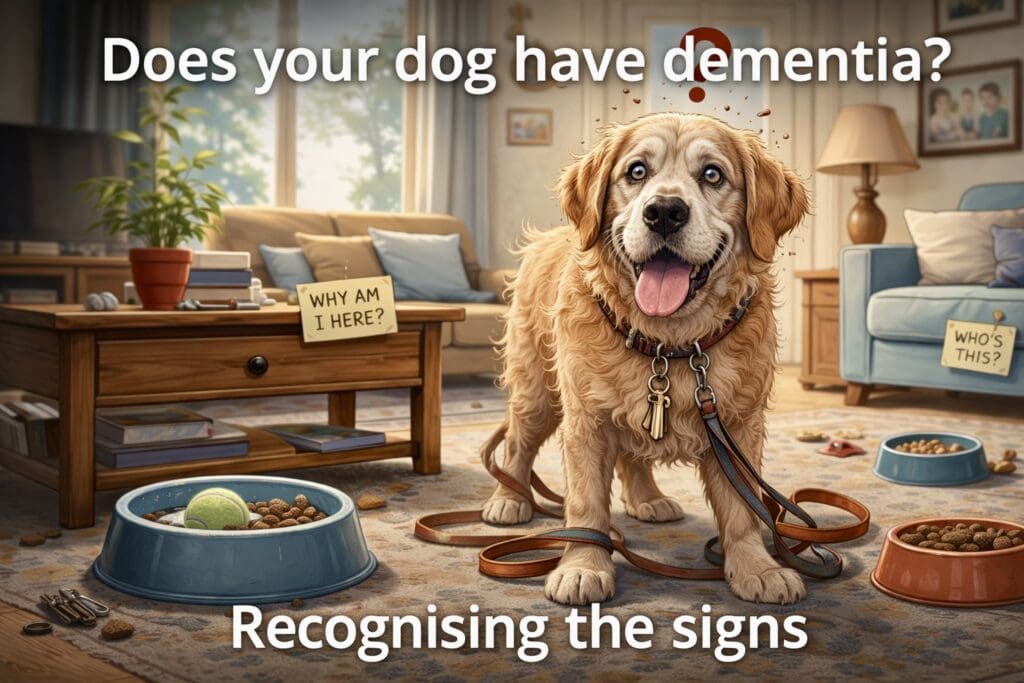
As dogs age, it is very normal for them to slow down—but if your dog seems confused, restless, or forgetful, it could be more than just aging. Dementia in dogs, also known as canine cognitive dysfunction (CCD), is a common condition in senior dogs that affects memory, behaviour, and awareness.
Understanding the signs early can help you support your dog and improve their quality of life.
What Is Dementia in Dogs?
Canine dementia is a degenerative brain condition similar to Alzheimer’s in humans. It typically affects older dogs and leads to gradual changes in behaviour, learning, and memory.
Signs and Symptoms of Dementia in Dogs
Symptoms often appear slowly and can be mistaken for normal aging. Common signs include:
Disorientation
- Getting lost in familiar places
- Staring at walls or appearing confused
Changes in Sleep Patterns
- Restless at night
- Sleeping more during the day
House Soiling
- Accidents indoors despite being house-trained
Behaviour Changes
- Less interest in people or play
- Increased anxiety or clinginess
Repetitive Actions
- Pacing or walking in circles
A useful way to remember these is the DISHA pattern:
- Disorientation
- Interaction changes
- Sleep disruption
- House soiling
- Activity changes
What Causes Dog Dementia?
Dementia in dogs is mainly linked to aging and changes in the brain, including:
- Loss of brain cells
- Reduced blood flow
- Build-up of harmful proteins
How to Help a Dog with Dementia
While there is no cure, there are ways to manage symptoms and support your dog:
Keep a Routine
Stick to consistent feeding, walking, and bedtime schedules.
Provide Mental Stimulation
Use puzzle toys, gentle training, and interaction to keep their mind active.
Improve Their Environment
- Use night lights
- Keep furniture in the same place
- Make food and water easy to access
Speak to Your Vet
A vet may recommend medications or special diets to support brain health.
When to Seek Help
If your dog shows ongoing confusion, anxiety, or major behaviour changes, it’s important to consult your vet. Early support can make a big difference.
Final Thoughts
Dementia in dogs can be difficult to watch, but with the right care and understanding, your dog can still enjoy a happy and comfortable life. Paying attention to the signs and acting early is key.